
From Standard to Safe
MAP original research on healthy building materials published by NYSERDA.
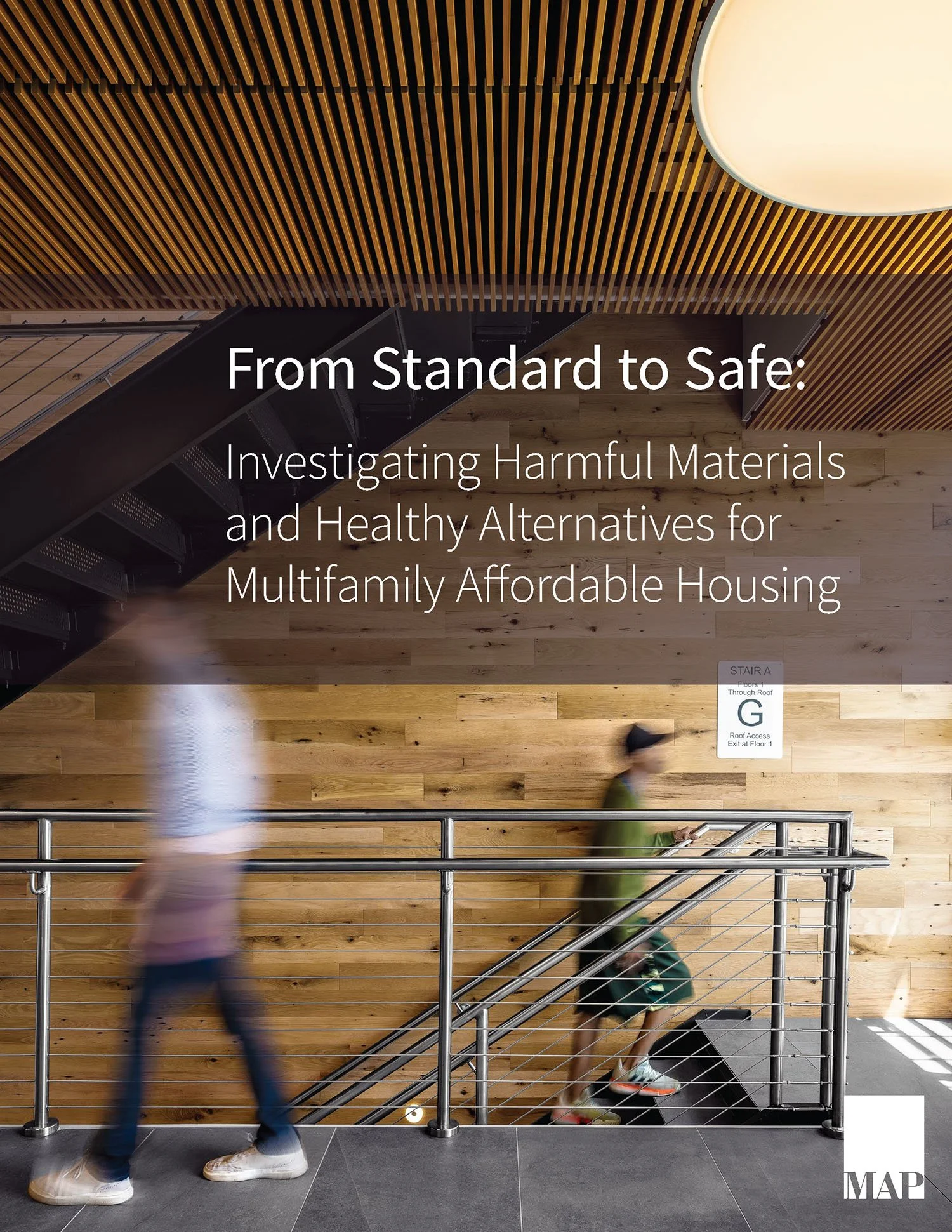
Healthy materials are central to resident well-being. Many widely used building products contain toxic chemicals that can negatively impact indoor air quality and increase the risk of adverse health outcomes. Even materials that are safe for the final occupant can pose threats to construction workers or generate substantial pollution during production and disposal that harms surrounding communities. Despite these risks, it can be difficult to reliably source non-toxic and sustainable materials in the present market, as ingredient transparency varies tremendously by manufacturer.
To evaluate how affordable housing developments can integrate safer products, MAP conducted a study using funding from NYSERDA’s Buildings of Excellence Early Design Support program. Using a senior housing development called Sol on Park as an example project, the research identifies harmful chemicals commonly found in affordable multifamily buildings and explores healthy alternatives. This was done in large part through participation in Living Future’s Safer Materials Shift. The 18-month program aimed to help design teams reduce their use of toxic products by avoiding substances on the organization’s Red List, a compilation of “worst in class” chemicals that pose serious risks to human health and the environment. Additionally, MAP conducted both an embodied carbon analysis and a holistic product comparison using Habitable’s Informed Product Guidance resource to gain a broader understanding of the factors that contribute to material health.
By following the process outlined by Safer Material Shift, MAP was able to significantly improve Sol on Park’s baseline specifications with Red List Free and Red List Approved products. We found that Red List Free and Approved products tended to have lower embodied carbon impacts, suggesting that avoiding Red List chemicals will support climate change mitigation goals in addition to improving human health. This study demonstrates that substantial improvements can be made despite current market limitations. Research at this scale is not necessary for every project – steps as simple as requesting transparency documentation or investigating the feasibility of several non-toxic products will help to cultivate a market for safer building materials.